Listen
Arrangement: Ian J. Watts / Mike Wilbury · Singalongasong Band / ClassicRocks
Lyrics
I found a drumstick,
I found a whistle,
I found a trumpet,
I found a cymbal.
So we can write our songs together,
And we can sing out loud forever.
It always makes us happy when we feel sad.
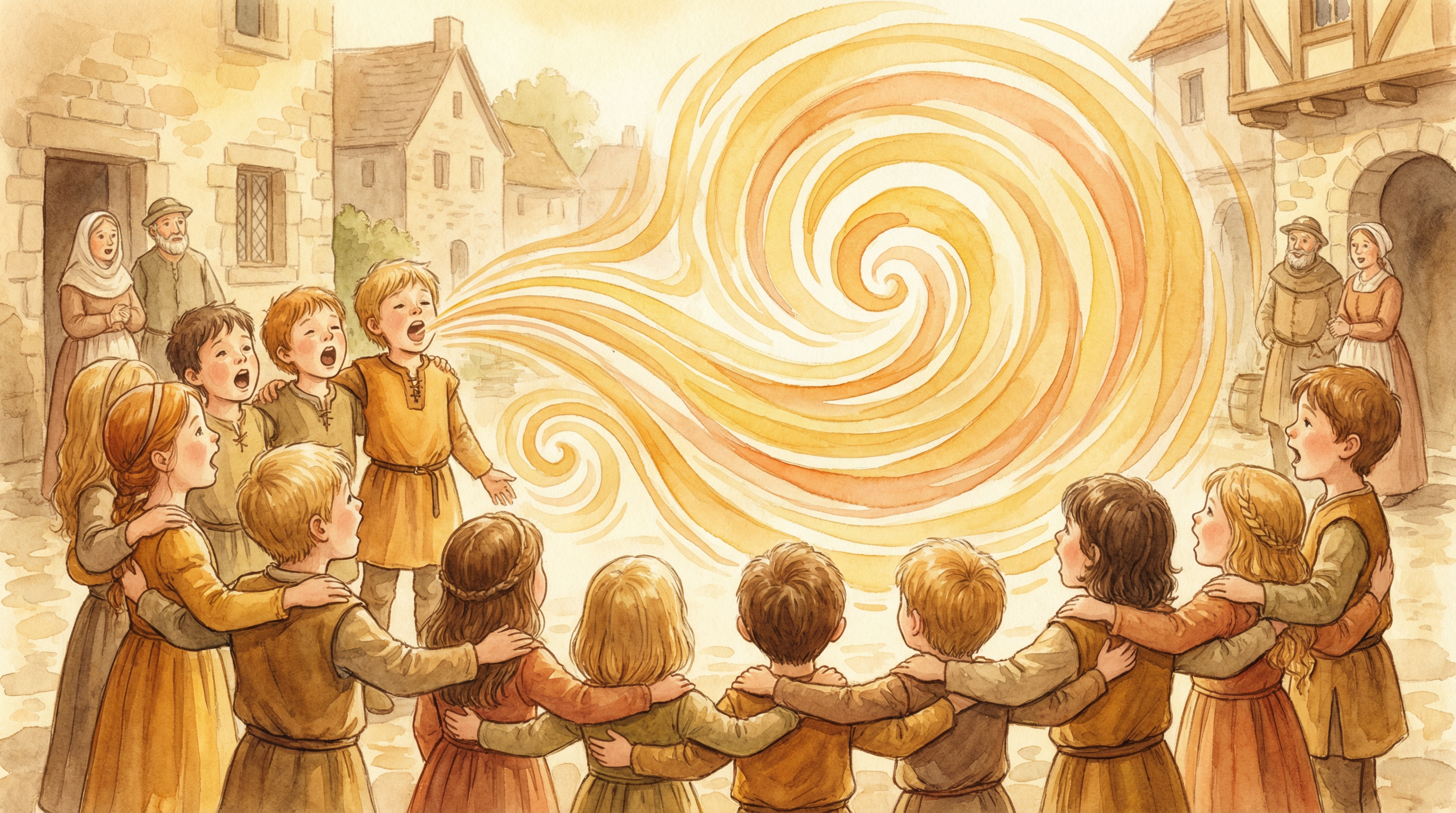
And we can sing, sing, sing,
And we can shout, shout, shout,
And the song keeps making me smile.
And we can strum, strum, strum,
And we can pluck, pluck, pluck,
And the song keeps growing inside.
I found a clarinet,
And a guitar,
And a piano,
And a wonderful harp.
So we can write our songs together,
And we can sing out loud forever.
It always makes us happy when we feel sad.
And we can sing, sing, sing,
And we can shout, shout, shout,
And the song keeps making me smile.
And we can strum, strum, strum,
And we can pluck, pluck, pluck,
And the song keeps growing inside.
We found a cello,
We found a shaker,
Now everybody is a music maker.
We can write our songs together,
And we can sing out loud forever.
It always makes us happy when we feel sad.
And we can sing, sing, sing,
And we can shout, shout, shout,
And the song keeps making me smile.
And we can strum, strum, strum,
And we can pluck, pluck, pluck,
And the song keeps growing inside.
Traditional lyrics — public domain. Arrangement © Singalongasong Band / ClassicRocks.
History & Background
History & Origin
"Sing, Sing, Sing" is an original song from the Nursery Rhymes Collections catalogue, designed to celebrate the experience of making music together. Rather than drawing on the traditional nursery rhyme repertoire, it invites children into the idea that any instrument — a drumstick, a whistle, a trumpet, a cymbal — is a door into music, and that making music together is one of the things that makes sadness lighter.
The song builds through three cumulative verses, each adding new instruments to the growing ensemble: the basic percussion of the first verse gives way to woodwind and string, then to the cello and the shaker, until "everybody is a music maker". This inclusive, accumulating structure mirrors the experience of an orchestra or a band finding its sound together.
The refrain — "it always makes us happy when we feel sad" — is a simple and true statement about what music does and why it matters. Children who sing this song are learning something about the function of music in their lives, not as a lesson but as an experience.
The arrangement features the kinds of sounds the song describes, making the instruments themselves part of the argument.