Sing a Song of Sixpence
Twenty-four blackbirds, a pecked-off nose, and a pocket full of rye
Listen
Arrangement: Ian J. Watts / Mike Wilbury · Singalongasong Band / ClassicRocks
Lyrics
Sing a song of sixpence,
A pocket full of rye,
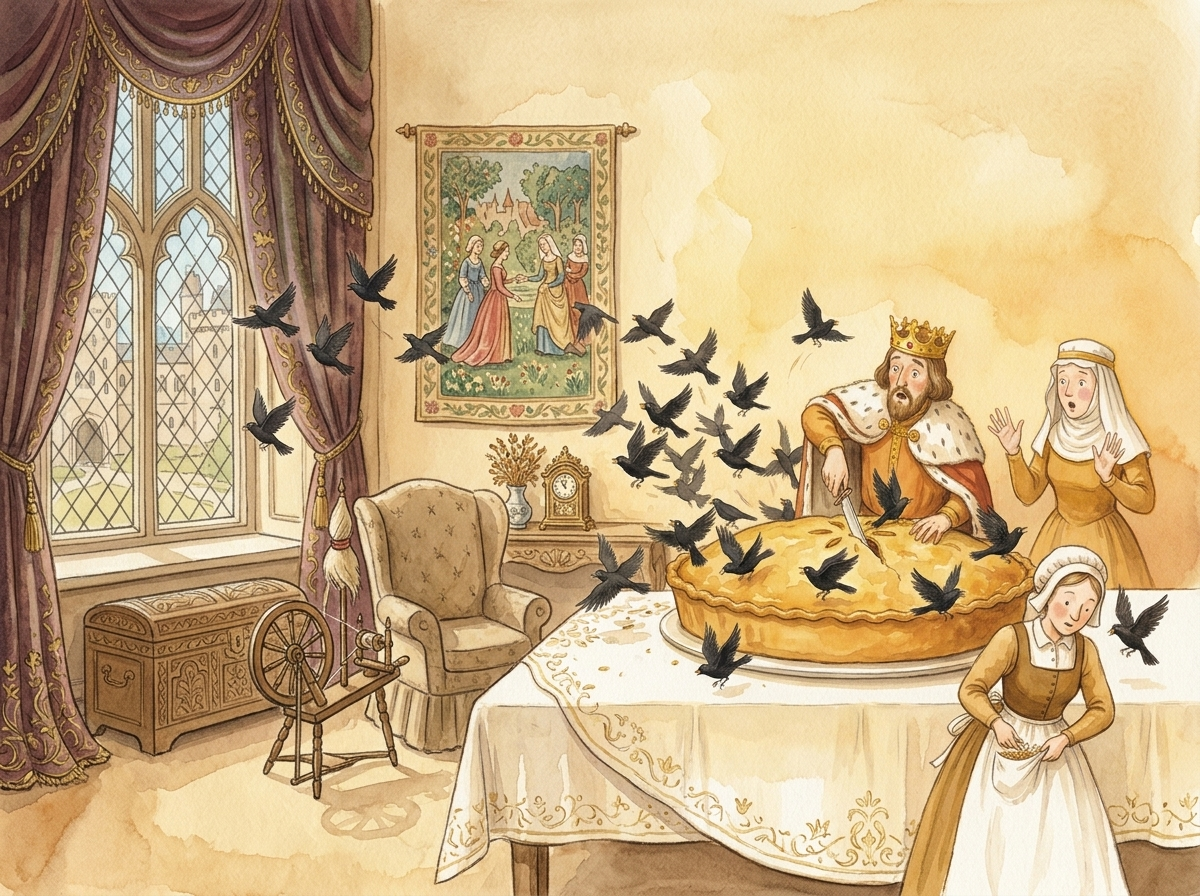
Four and twenty blackbirds
Baked in a pie.
When the pie was opened
The birds began to sing,
Wasn't that a dainty dish
To set before a king?
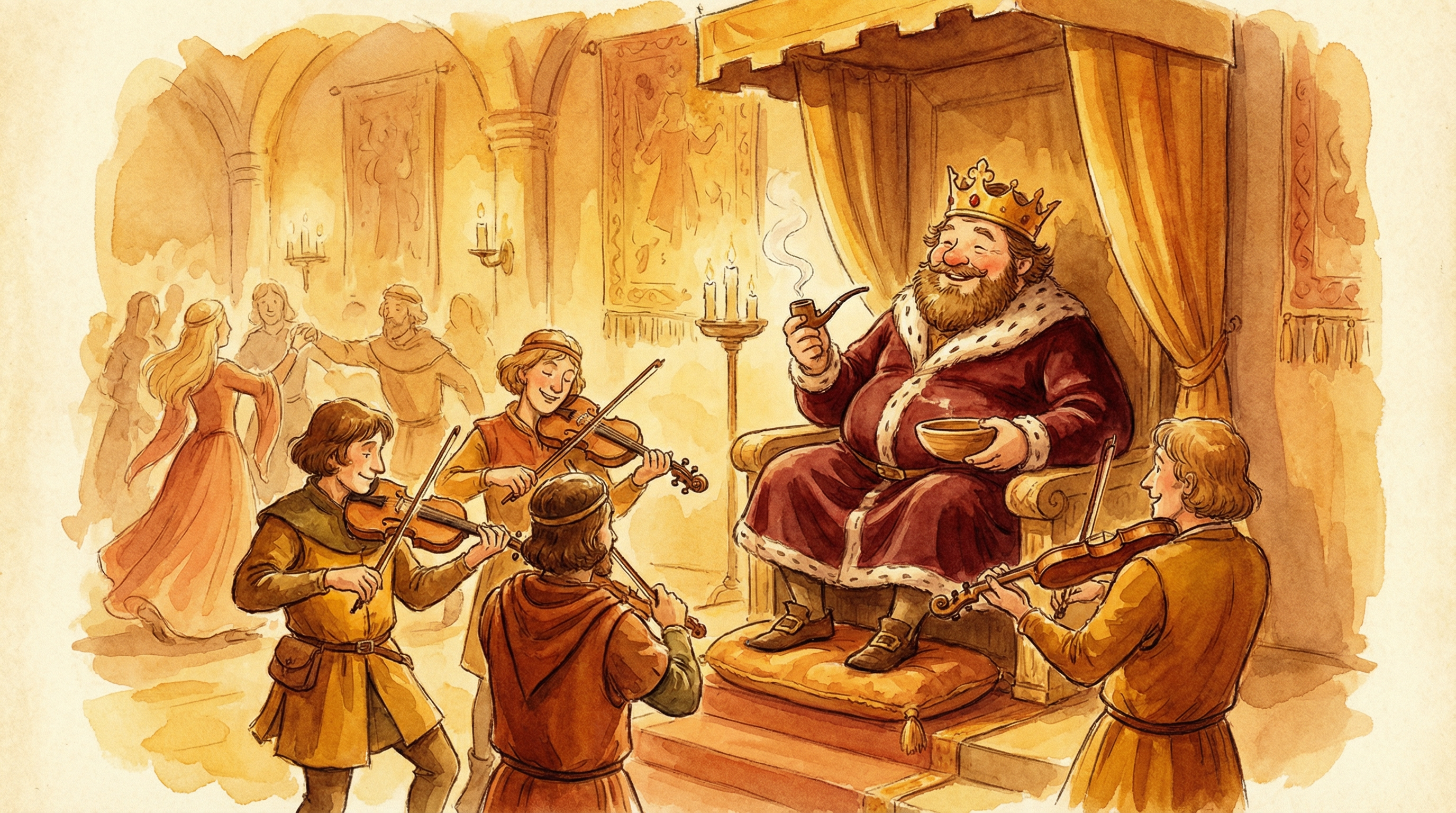
The king was in his counting house
Counting out his money,
The queen was in the parlour
Eating bread and honey.
The maid was in the garden
Hanging out the clothes,
When down came a blackbird
And pecked off her nose!
Traditional lyrics — public domain. Arrangement © Singalongasong Band / ClassicRocks.
History & Background
History & Origin
"Sing a Song of Sixpence" was first printed around 1744 and has been one of the most popular nursery rhymes in the English language ever since. It has attracted more attempts at historical interpretation than almost any other rhyme in the canon, with theories connecting it to Henry VIII's dissolution of the monasteries, a coded message to pirate recruits, and the court of Henry VIII — none of which are supported by reliable evidence.
The practice of baking live birds in a pie was real: elaborate "animated pies" were occasionally served at medieval and Renaissance banquets, designed to surprise guests when cut open. A 1549 Italian cookbook describes the technique, confirming that the image was not merely fantastic.
The rhyme's three parallel scenes — the counting house, the parlour, the garden — give it the structure of a miniature drama in which the king, queen, and maid each occupy their proper sphere. The blackbird that escapes and pecks off the maid's nose is a darkly comic intrusion into this orderly picture of domestic life.
The rye in the pocket full is almost certainly a reference to the grain used to attract and capture birds, though precisely which birds were worth a sixpenny song is left, with characteristic nursery rhyme tact, unstated.