One, Two, Three, Four, Five
Once I caught a fish alive — the small cost of letting go
Listen
Arrangement: Ian J. Watts / Mike Wilbury · Singalongasong Band / ClassicRocks
Lyrics
One, two, three, four, five,
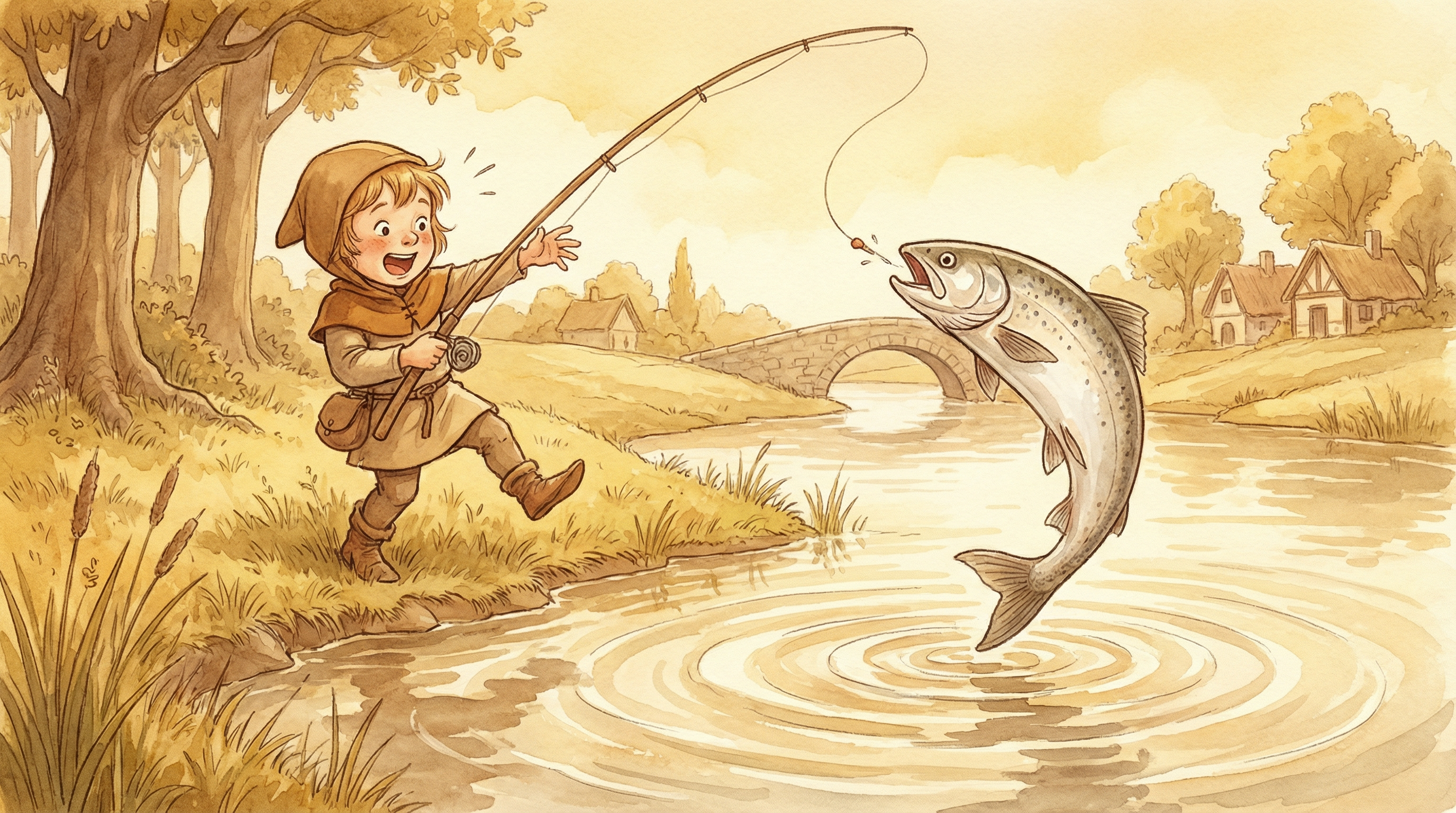
Once I caught a fish alive,
Six, seven, eight, nine, ten,
Then I threw it back again.
Why did you let it go?
Because it bit my finger so.
Which finger did it bite?
This little finger on my right.
Traditional lyrics — public domain. Arrangement © Singalongasong Band / ClassicRocks.
History & Background
History & Origin
"One, Two, Three, Four, Five" is a traditional English counting rhyme of uncertain age, though it has been in print since at least the nineteenth century. It belongs to the small family of counting rhymes that use fingers and counting as a teaching tool while embedding the numbers in a brief narrative with a satisfying punchline.
The story is slight but complete: a fish is caught, a fish bites, a fish is released. The moral, such as it is, is pragmatic rather than sentimental — the finger hurts, so the fish goes free. The rhyme ends with an action, traditionally performed by holding up the little finger of the right hand, which makes it ideal for nurseries and playgroups where physical engagement keeps young children focused.
The counting structure — one to five, then six to ten in the second line — makes the rhyme useful for teaching numbers in two manageable groups, with a memorable story to anchor the sequence. Our arrangement gives it a bright, energetic setting that matches the simple directness of the verse.