Old Mother Hubbard
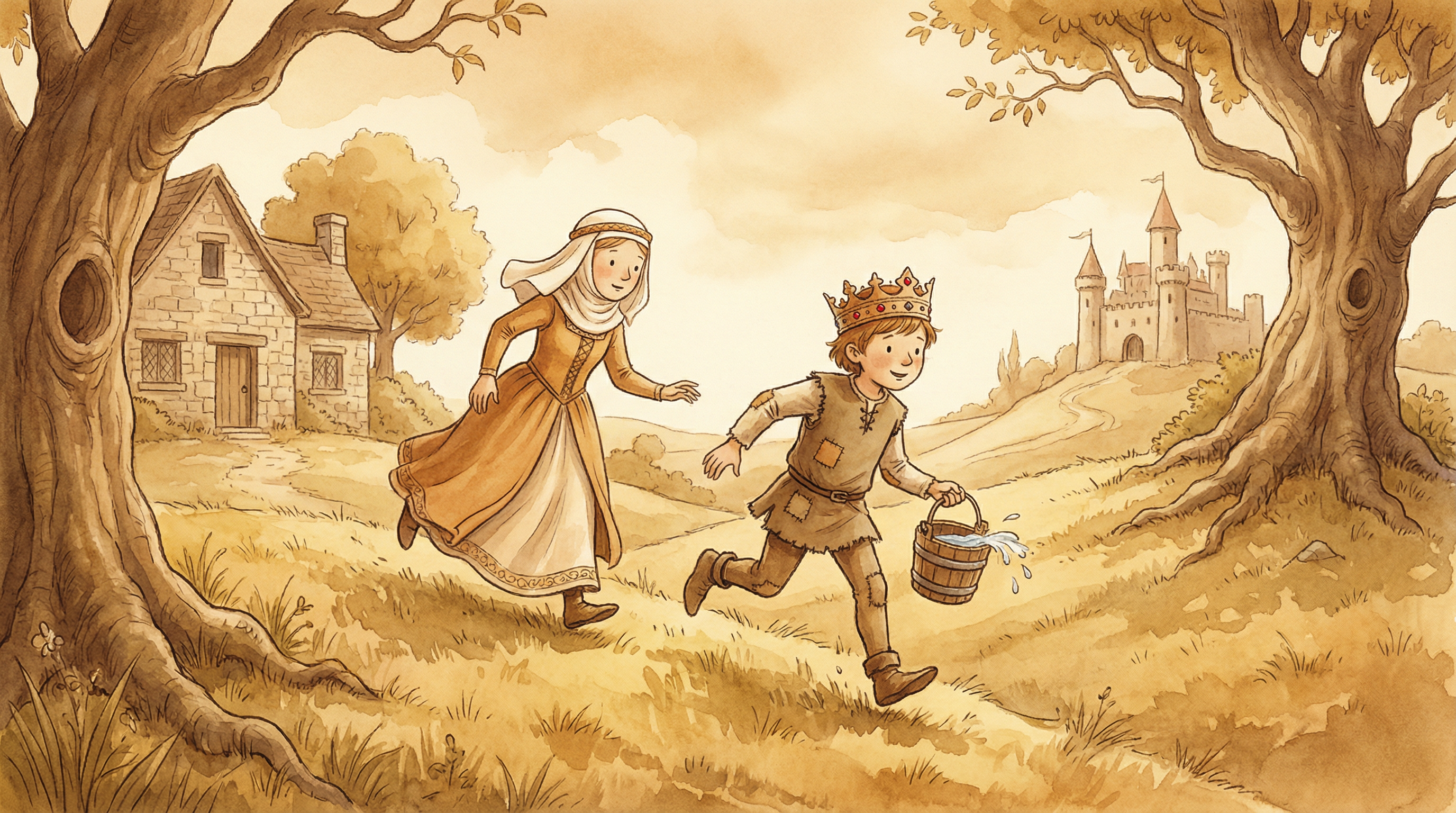
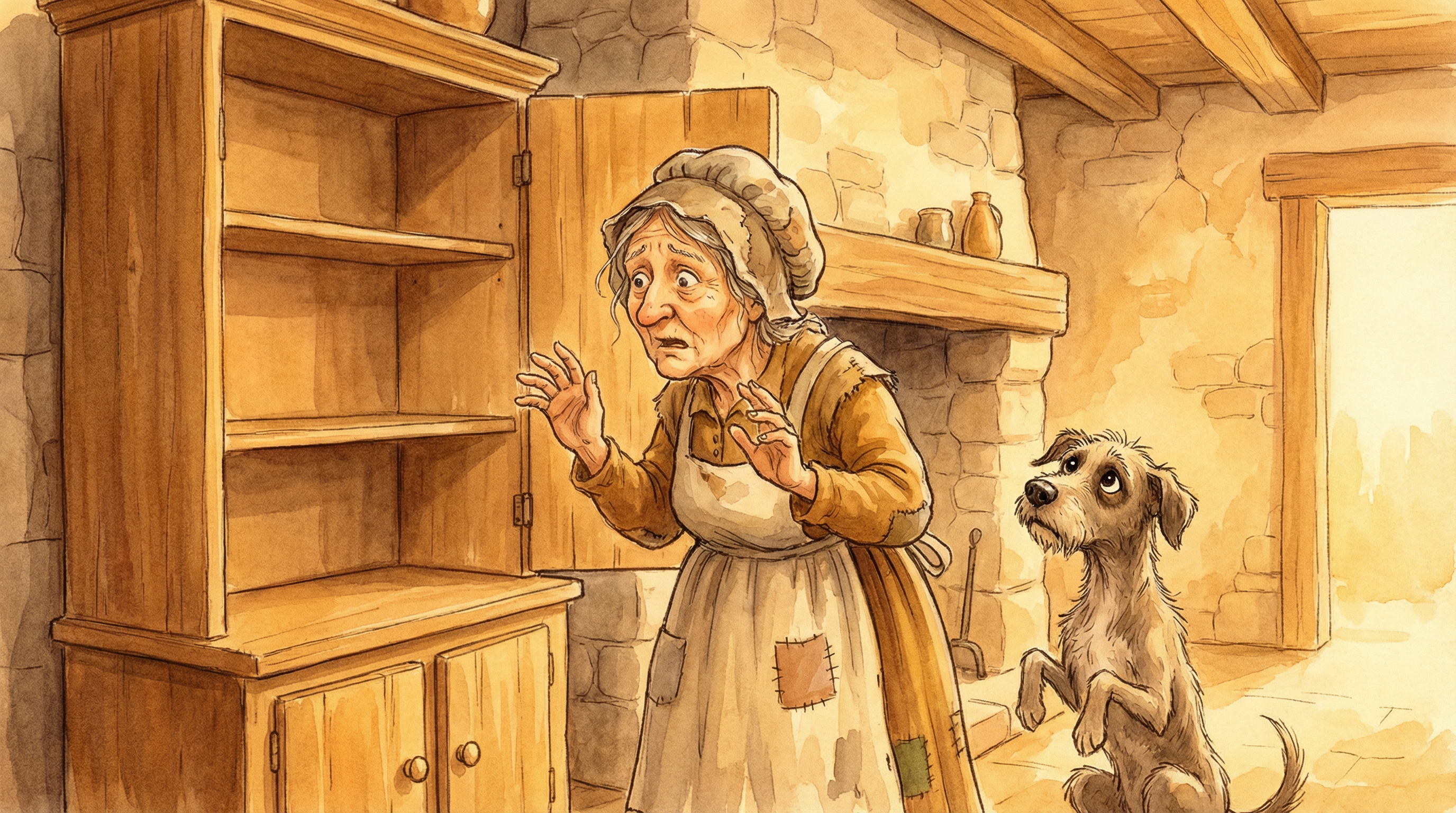
She went to the cupboard — but when she got there, the cupboard was bare
Listen
Arrangement: Ian J. Watts / Mike Wilbury · Singalongasong Band / ClassicRocks
Lyrics
Old Mother Hubbard went to the cupboard
To fetch her poor dog a bone,
But when she got there the cupboard was bare,
And so the poor dog had none.
She went to the baker's to buy him some bread,
But when she came back he stood on his head.
She went to the market to buy him some fish,
But when she got back he was licking the dish.
She went to the farm shop to buy him some fruit,
But when she got back he was playing the flute.
She went to the tailor's to buy him a coat,
But when she came back he was riding a goat.
She went to the hatter's to buy him a hat,
But when she came back he was feeding the cat.
She went to the barber's to buy him a wig,
But when she came back he was dancing a jig.
She went to the cobbler's to buy him some shoes,
But when she came back he was reading the news.
She went to the seamstress to buy him some linen,
But when she came back the dog was a-spinning.
The dame made a curtsy, the dog made a bow,
The dame said "Your servant," the dog said "Bow-wow!"
Traditional lyrics — public domain. Arrangement © Singalongasong Band / ClassicRocks.
History & Background
History & Origin
"Old Mother Hubbard" was published in 1805 by Sarah Catherine Martin as a chapbook entitled The Comic Adventures of Old Mother Hubbard and Her Dog. Martin wrote it, she claimed, to amuse herself during a stay at the home of her future brother-in-law. It sold over ten thousand copies in its first few months — an extraordinary number for the time — and established itself immediately as a classic.
The rhyme's comedy relies on escalating absurdity: Mother Hubbard goes out on an errand and returns each time to find her dog doing something increasingly impossible. Standing on his head, playing the flute, riding a goat, dancing a jig — the dog's accomplishments multiply while his owner is out, as if he performs only in her absence.
The ending is the best of all: the dog, having revealed himself to be a creature of almost human capability throughout the poem, finally speaks. "The dog said bow-wow" after saying "your servant" is a perfect comic deflation — the dog could speak all along, but chose that moment for his debut.
Sarah Martin reportedly based the rhyme on an earlier version she had encountered, but the published chapbook was an immediate sensation and the text as she wrote it became definitive. Old Mother Hubbard and her dog remain one of the most recognisable double-acts in the English nursery tradition.