Listen
Arrangement: Ian J. Watts / Mike Wilbury · Singalongasong Band / ClassicRocks
Lyrics
Here we go looby loo,
Here we go looby light,
Here we go looby loo,
All on a Saturday night.
Put your right foot in,
Put your right foot out,
Shake it a little, a little,
And turn yourself about.
Here we go looby loo,
Here we go looby light,
Here we go looby loo,
All on a Saturday night.
Put your left foot in,
Put your left foot out,
Shake it a little, a little,
And turn yourself about.
Here we go looby loo,
Here we go looby light,
Here we go looby loo,
All on a Saturday night.
Put your right hand in,
Put your right hand out,
Shake it a little, a little,
And turn yourself about.
Here we go looby loo,
Here we go looby light,
Here we go looby loo,
All on a Saturday night.
Put your left hand in,
Put your left hand out,
Shake it a little, a little,
And turn yourself about.
Here we go looby loo,
Here we go looby light,
Here we go looby loo,
All on a Saturday night.
Put your nose in,
Put your nose out,
Shake it a little, a little,
And turn yourself about.
Traditional lyrics — public domain. Arrangement © Singalongasong Band / ClassicRocks.
History & Background
History & Origin
"Looby Loo" is a circle action game and song that has been part of British children's culture for well over a century. The song was recorded by folklorists in the nineteenth century, and versions appear in various nursery rhyme collections of the 1880s and 1890s, though it is certainly older than these printed records.
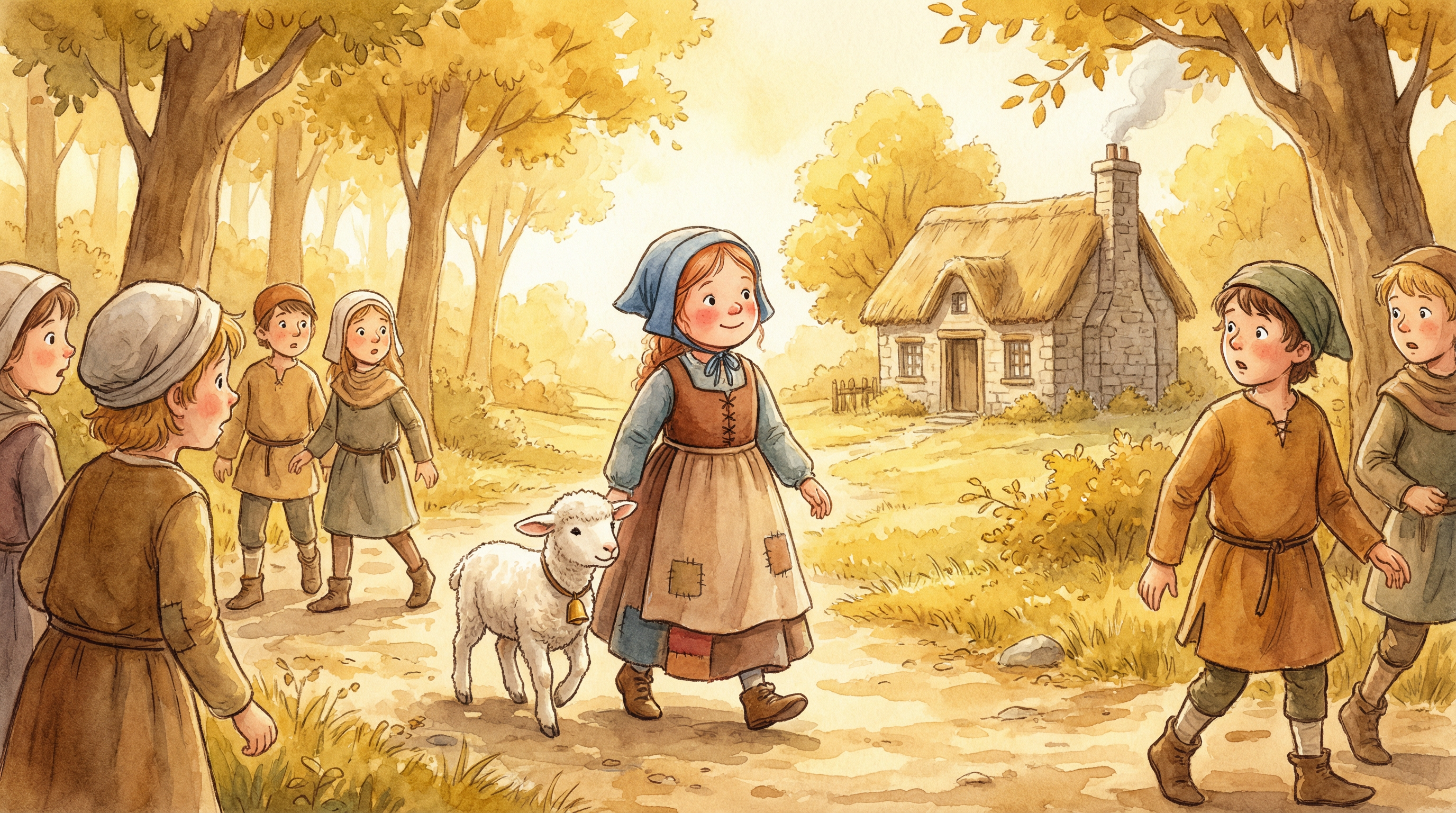
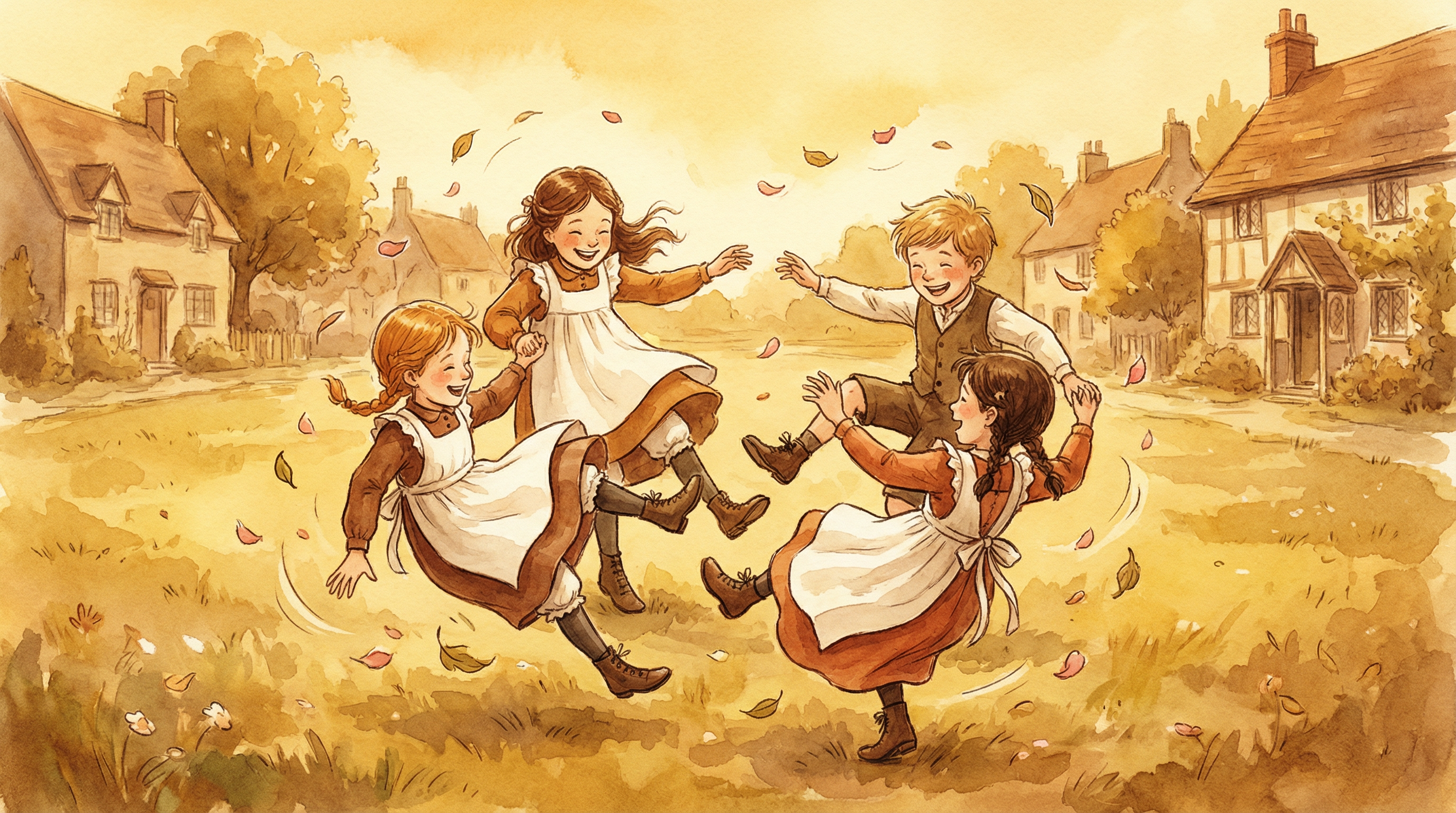
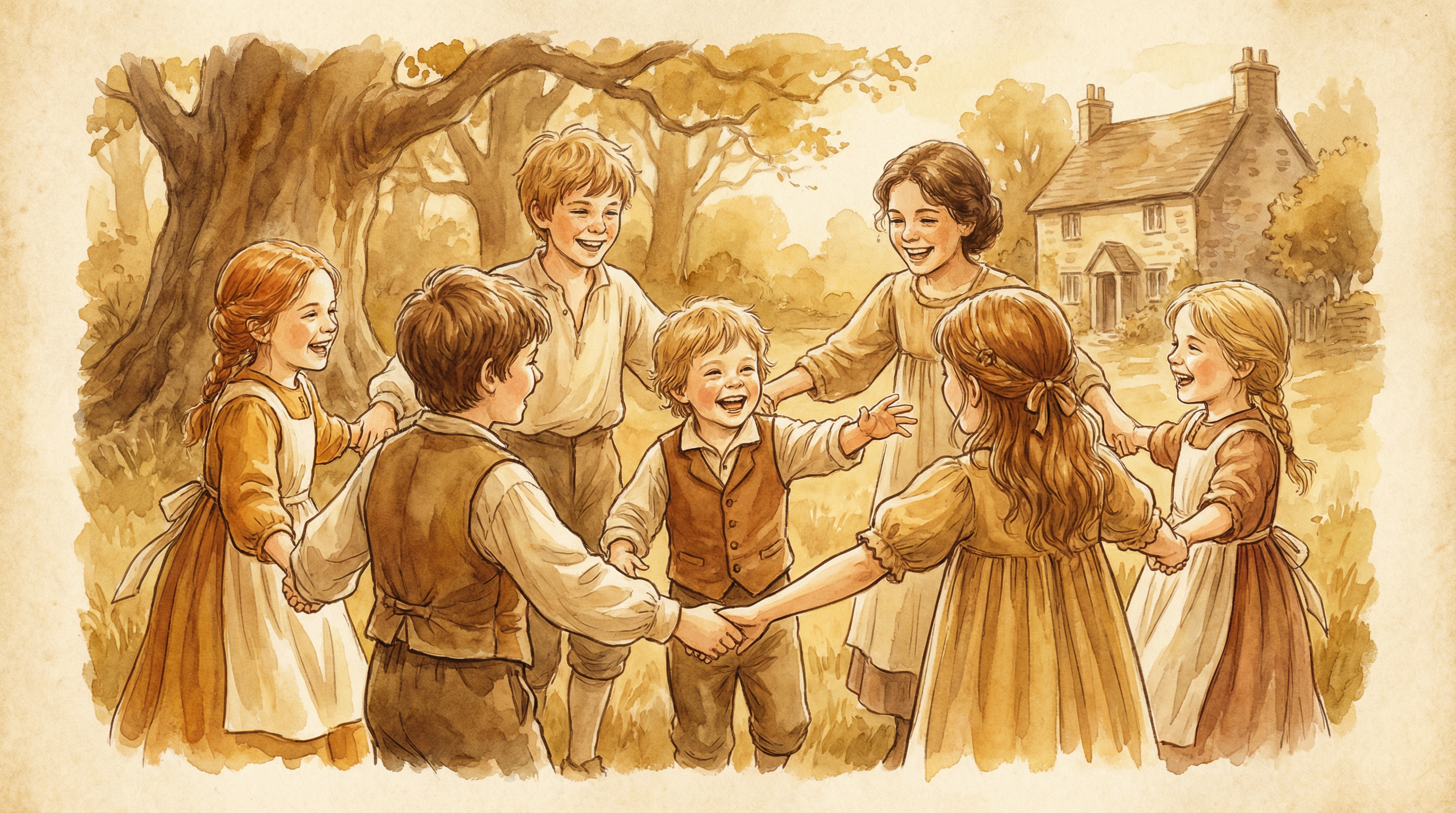
The game is performed with children in a circle: the chorus involves dancing or skipping around the ring, while each verse requires putting the named body part "in" to the centre of the circle, then "out", shaking it, and turning around. The sequence of body parts — right foot, left foot, right hand, left hand, nose — gives the song its cumulative, slightly silly energy, with the nose verse invariably producing the most laughter.
The phrase "looby loo" (sometimes "looby-lo" or "looby light") has no agreed meaning — it appears to be a nonsense phrase of the kind common in children's circle songs, where the pleasure is in the sound of the syllables rather than any literal meaning. "Looby" was used in older dialects to mean a clumsy or loutish person, but this connection is probably coincidental.
The Saturday night setting — "all on a Saturday night" — places the game firmly in leisure time, a reminder that Saturday evenings were the primary time for communal play and entertainment before organised children's activities became widespread.