Listen
Arrangement: Ian J. Watts / Mike Wilbury · Singalongasong Band / ClassicRocks
Lyrics
Little Tommy Tucker
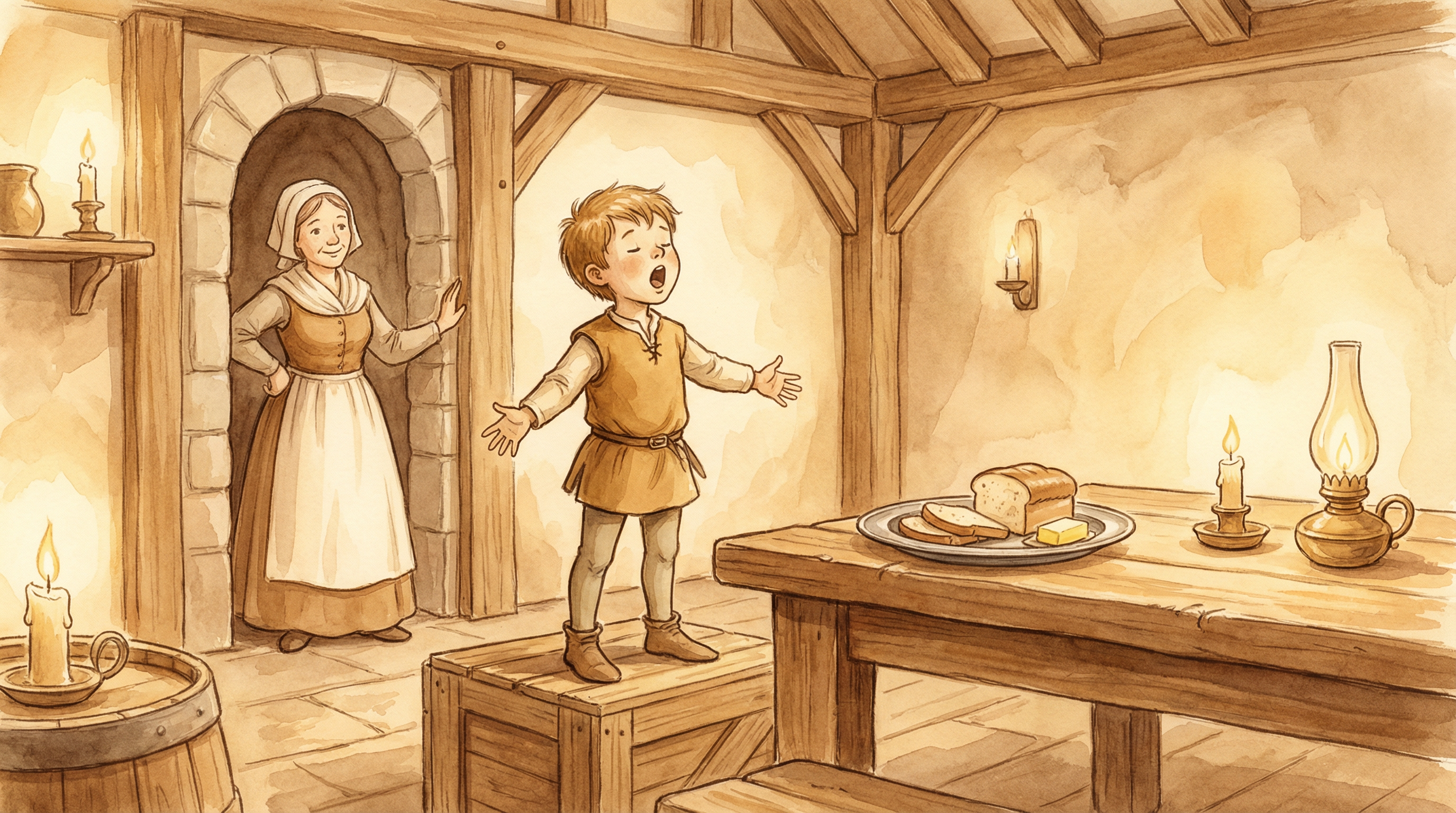
He sang for his supper,
What did he sing for?
But white bread and butter.
How can he cut it without any knife?
How can he marry without any wife?
Traditional lyrics — public domain. Arrangement © Singalongasong Band / ClassicRocks.
History & Background
History & Origin
"Little Tommy Tucker" first appeared in Tommy Thumb's Pretty Song Book around 1744, making it one of the earliest nursery rhymes to be recorded in print. The rhyme presents Tommy as a street singer or beggar who earns his food through performance — singing for his supper in the literal sense that was once common practice for travelling musicians and the poor.
White bread was a luxury in the eighteenth century; most working people ate coarse brown bread made from unrefined flour. For Tommy Tucker to be singing for white bread and butter suggests either that he is doing very well for himself, or that the rhyme is gently mocking the ambition of his aspirations.
The final two lines introduce an absurdist logic that delights children: the questions are parallel in their impossibility. Without a knife, cutting bread is difficult; without a wife, marriage is definitionally impossible. Both questions have the same unanswerable quality, which gives the rhyme a teasing, riddling character.
"Singing for your supper" has passed into common English usage as a phrase meaning earning one's keep through entertainment or performance, a legacy that suggests the rhyme captured something genuinely recognisable about the relationship between talent, food, and survival.