Little Boy Blue
The boy who should be watching the sheep is fast asleep under a haystack
Listen
Arrangement: Ian J. Watts / Mike Wilbury · Singalongasong Band / ClassicRocks
Lyrics
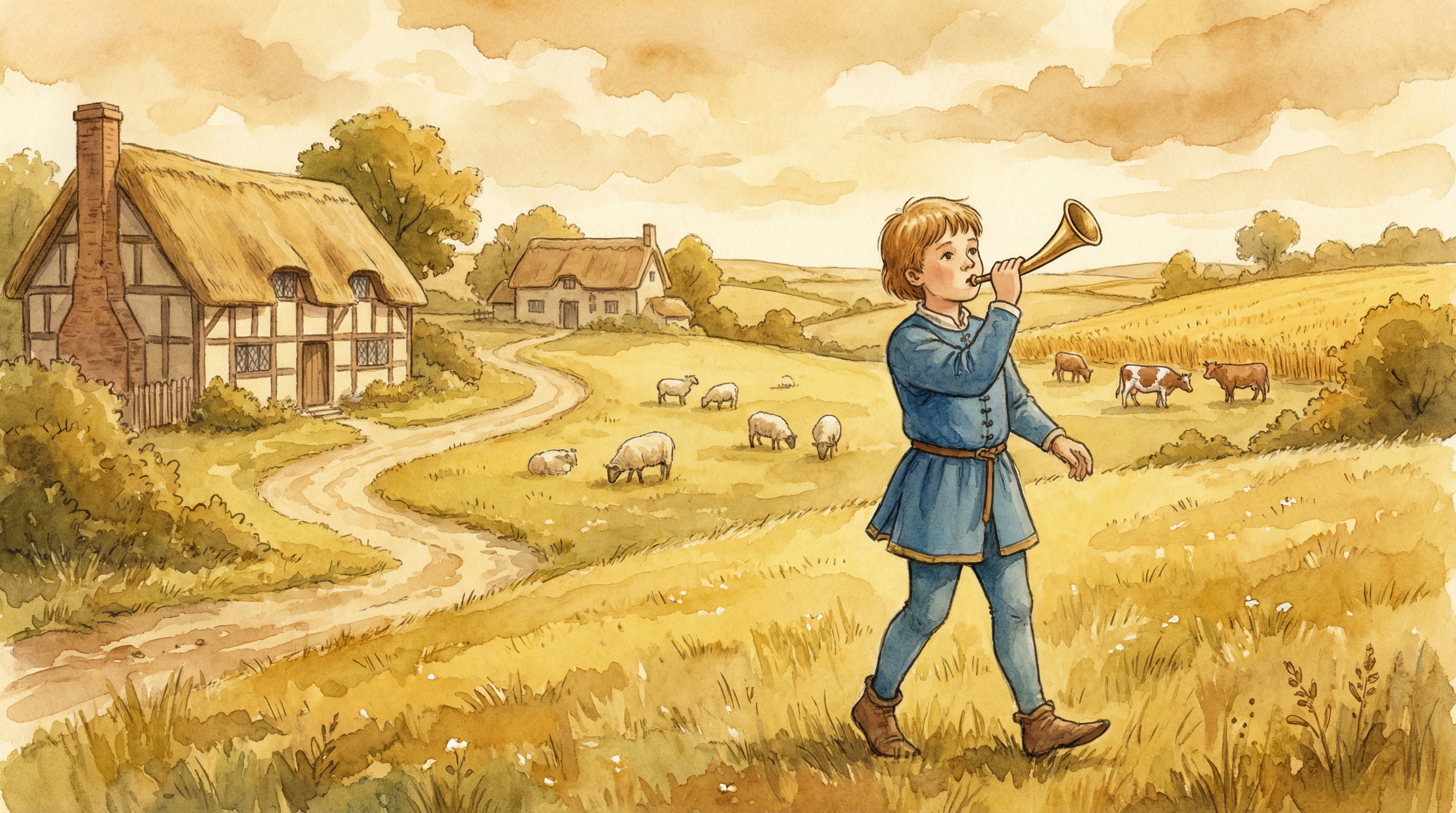
Little Boy Blue, come blow your horn,
The sheep's in the meadow, the cow's in the corn.
But where is the boy who looks after the sheep?
He's under a haystack, fast asleep.
Will you wake him? No, not I,
For if I do, he's sure to cry.
If I do, he's sure to cry.
Traditional lyrics — public domain. Arrangement © Singalongasong Band / ClassicRocks.
History & Background
History & Origin
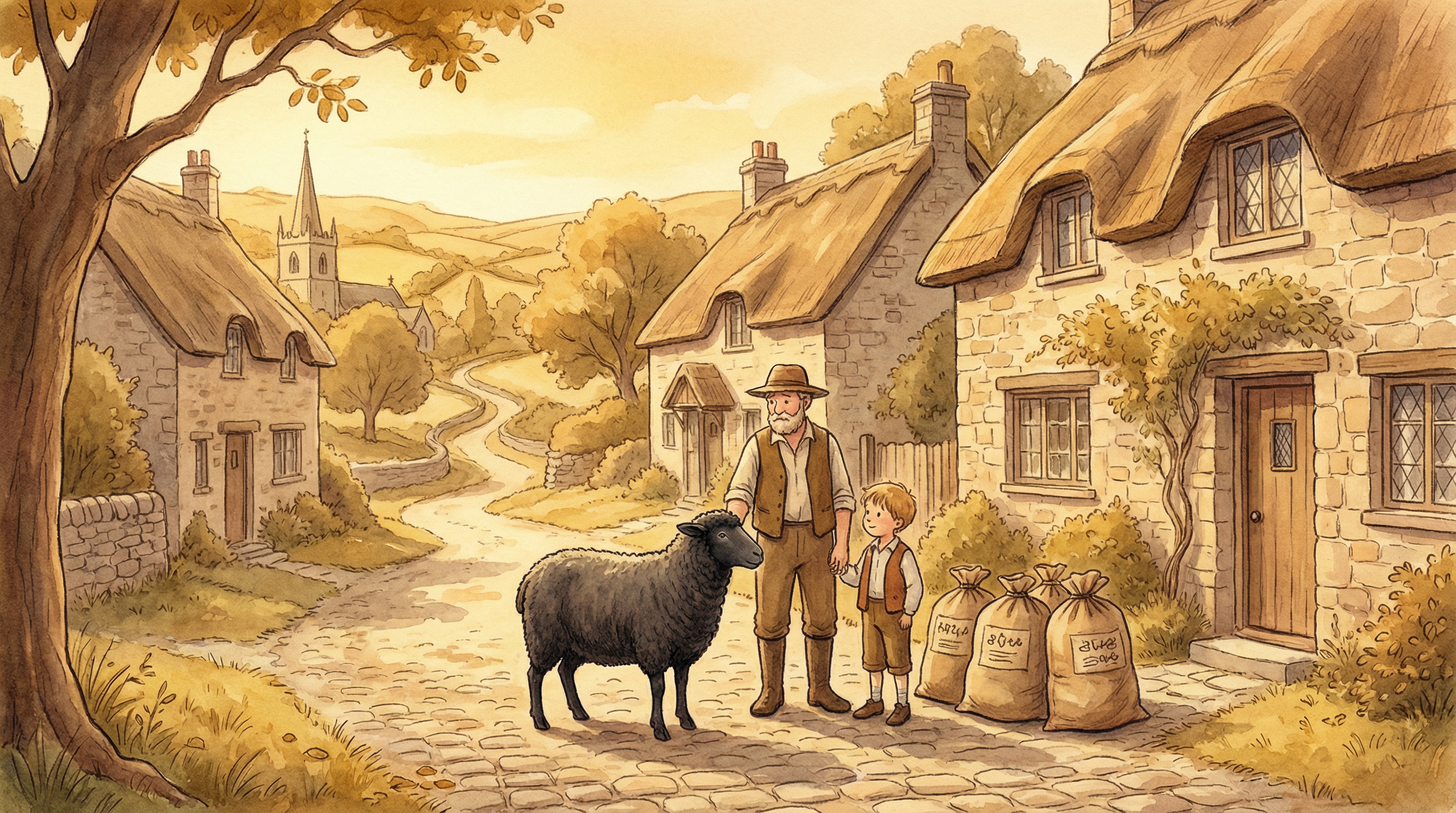
"Little Boy Blue" first appeared in print in Tommy Thumb's Pretty Song Book in 1744, though it is generally considered to be considerably older. The scenario is one of complete pastoral disorder: the sheep have wandered into the meadow they shouldn't be in, the cow has got into the corn, and the boy whose job it is to prevent exactly this has fallen asleep under a haystack.
The final couplet — "Will you wake him? No, not I, for if I do, he's sure to cry" — adds a layer of gentle comedy. The dereliction of duty is compounded by the impossibility of correction: waking him will only create noise without solving anything. There is a resigned wisdom here that children find satisfying, the understanding that sometimes the best course is to leave a sleeping child alone.
Some commentators have identified "Little Boy Blue" with Cardinal Wolsey, who was the son of an Ipswich butcher and supposedly looked after cattle in his youth. This theory was proposed in the nineteenth century and has been repeated often, but there is no contemporary evidence to support it.
The rhyme is a small portrait of rural childhood: the weight of responsibility, the irresistibility of sleep on a warm afternoon, and the mild chaos that results. Our arrangement brings out its warmth and gentle humour.