Listen
Arrangement: Ian J. Watts / Mike Wilbury · Singalongasong Band / ClassicRocks
Lyrics
Kumbaya my Lord, kumbaya,
Kumbaya my Lord, kumbaya,
Kumbaya my Lord, kumbaya,
Oh Lord, kumbaya.
Someone's crying, Lord, kumbaya,
Someone's crying, Lord, kumbaya,
Someone's crying, Lord, kumbaya,
Oh Lord, kumbaya.
Someone's praying, Lord, kumbaya,
Someone's praying, Lord, kumbaya,
Someone's praying, Lord, kumbaya,
Oh Lord, kumbaya.
Someone's singing, Lord, kumbaya,
Someone's singing, Lord, kumbaya,
Someone's singing, Lord, kumbaya,
Oh Lord, kumbaya.
Someone's sleeping, Lord, kumbaya,
Someone's sleeping, Lord, kumbaya,
Someone's sleeping, Lord, kumbaya,
Oh Lord, kumbaya.
Traditional lyrics — public domain. Arrangement © Singalongasong Band / ClassicRocks.
History & Background
History & Origin
"Kumbaya" is a spiritual song that first came to wider attention in the 1930s, when recordings were made by folklorists in the American South. The title is generally understood as a Gullah rendering of "come by here" — a prayer for divine presence in moments of need. The Gullah people, descendants of enslaved Africans living on the Sea Islands of South Carolina and Georgia, created a creole culture with its own distinctive language and musical tradition.
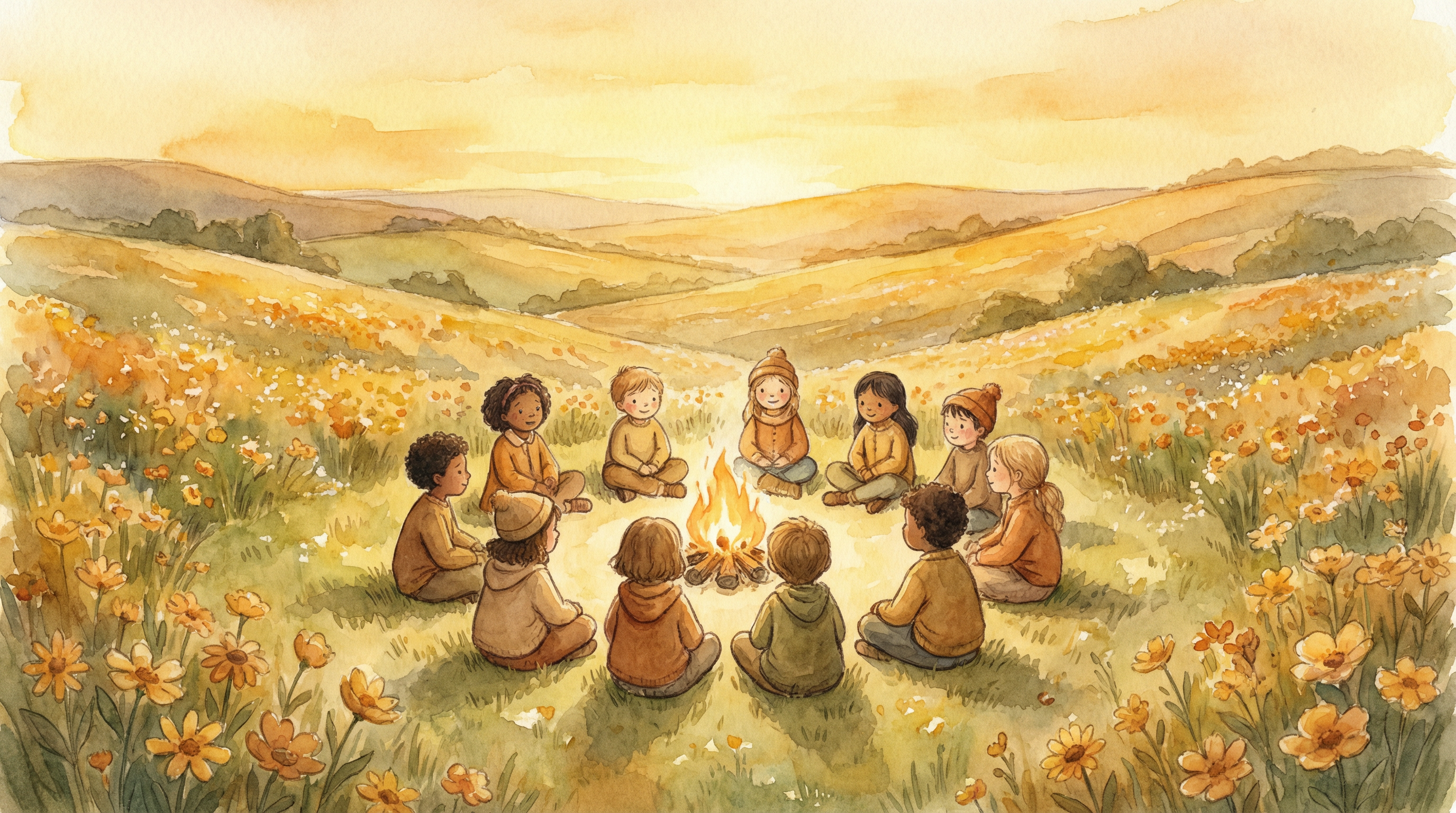
The song became widely known in the 1950s and 1960s through the folk revival, when it was taken up by the civil rights movement and the international folk scene. Pete Seeger, Joan Baez, and many others recorded versions, and the song became a staple of campfires, youth groups, and protest gatherings around the world.
The verses address the full range of human experience in their simplest forms: someone is crying, someone is praying, someone is singing, someone is sleeping. Each condition is brought before the Lord, not with elaborate theological argument but with the quiet directness of genuine prayer. The repetition of "kumbaya" after each line gives the song its meditative, almost hypnotic quality.
"Kumbaya" has become so associated with earnest communal singing that it is sometimes used ironically, but this should not diminish the genuine beauty and emotional directness of the original.