Listen
Arrangement: Ian J. Watts / Mike Wilbury · Singalongasong Band / ClassicRocks
Lyrics
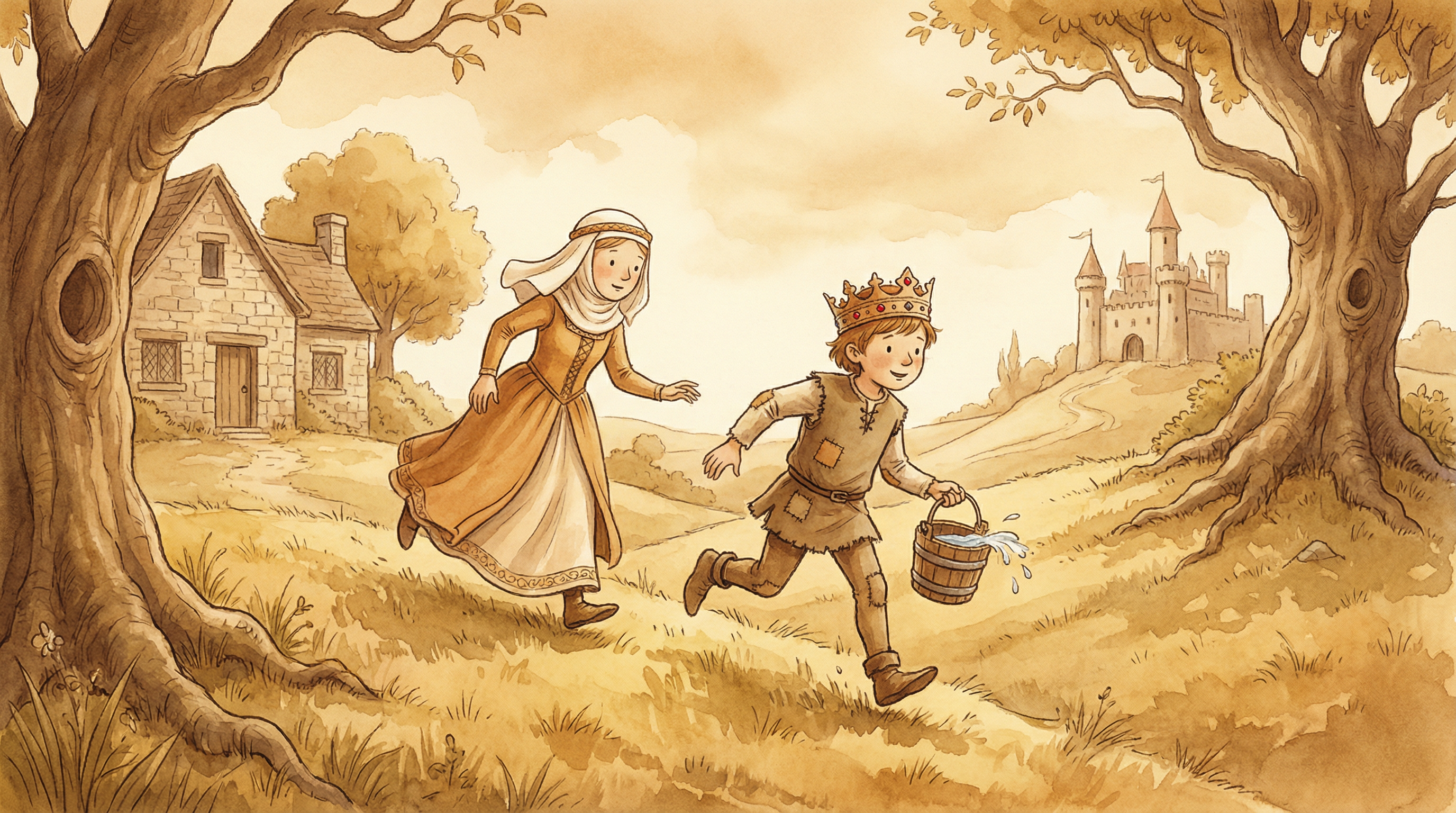
Jack and Jill went up the hill
To fetch a pail of water.
Jack fell down and broke his crown,
And Jill came tumbling after.
Then up got Jack and said to Jill,
As in his arms he took her,
"Brush off that dirt for you're not hurt,
Let's fetch the pail of water."
So Jack and Jill went up the hill
To fetch the pail of water,
And took it home to Mother dear,
Who thanked her son and daughter.
Traditional lyrics — public domain. Arrangement © Singalongasong Band / ClassicRocks.
History & Background
History & Origin
"Jack and Jill" is one of the oldest and most enduring nursery rhymes in the English language, first recorded in print in 1765 in Mother Goose's Melody. Its simple story — two children go up a hill to fetch water, Jack falls and hurts his head, Jill tumbles after — has been retold in countless versions over the centuries.
The rhyme has attracted a remarkable number of historical interpretations. One popular theory identifies Jack and Jill with King Louis XVI and Marie Antoinette, but this is chronologically impossible as the rhyme predates the French Revolution. Another links it to a Norse myth about two children abducted by the moon. Most scholars regard these as entertaining but unsupported speculation, and treat the rhyme as what it most obviously is: a simple, memorable tale of childhood mishap on a hill.
The extended verses, which appear in later printings, provide a more satisfying narrative arc. Jack picks himself up, reassures Jill, and they go back to complete the errand — a small lesson in resilience wrapped in rhyme. The detail that their mother thanks them both on their return gives the story a domestic warmth that the first verse alone lacks.
Hills, water sources, and tumbling children were all familiar features of everyday rural life in pre-industrial England. The rhyme's endurance lies in its combination of simple rhythm, memorable imagery, and the universal experience of getting hurt and getting back up.