Hey Diddle Diddle
The most wonderfully surreal nursery rhyme ever written
Listen
Arrangement: Ian J. Watts / Mike Wilbury · Singalongasong Band / ClassicRocks
Lyrics
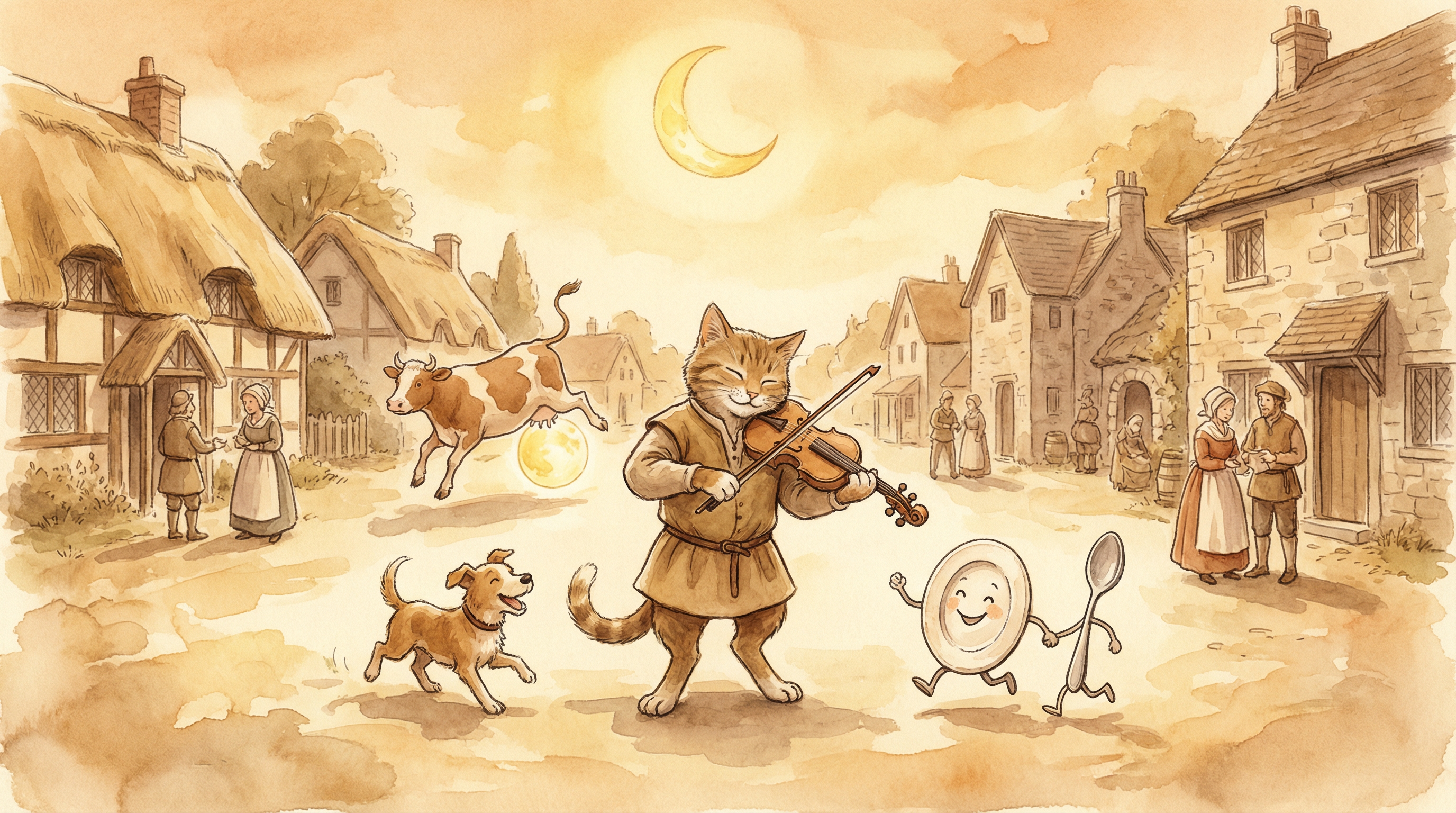
Hey diddle diddle,
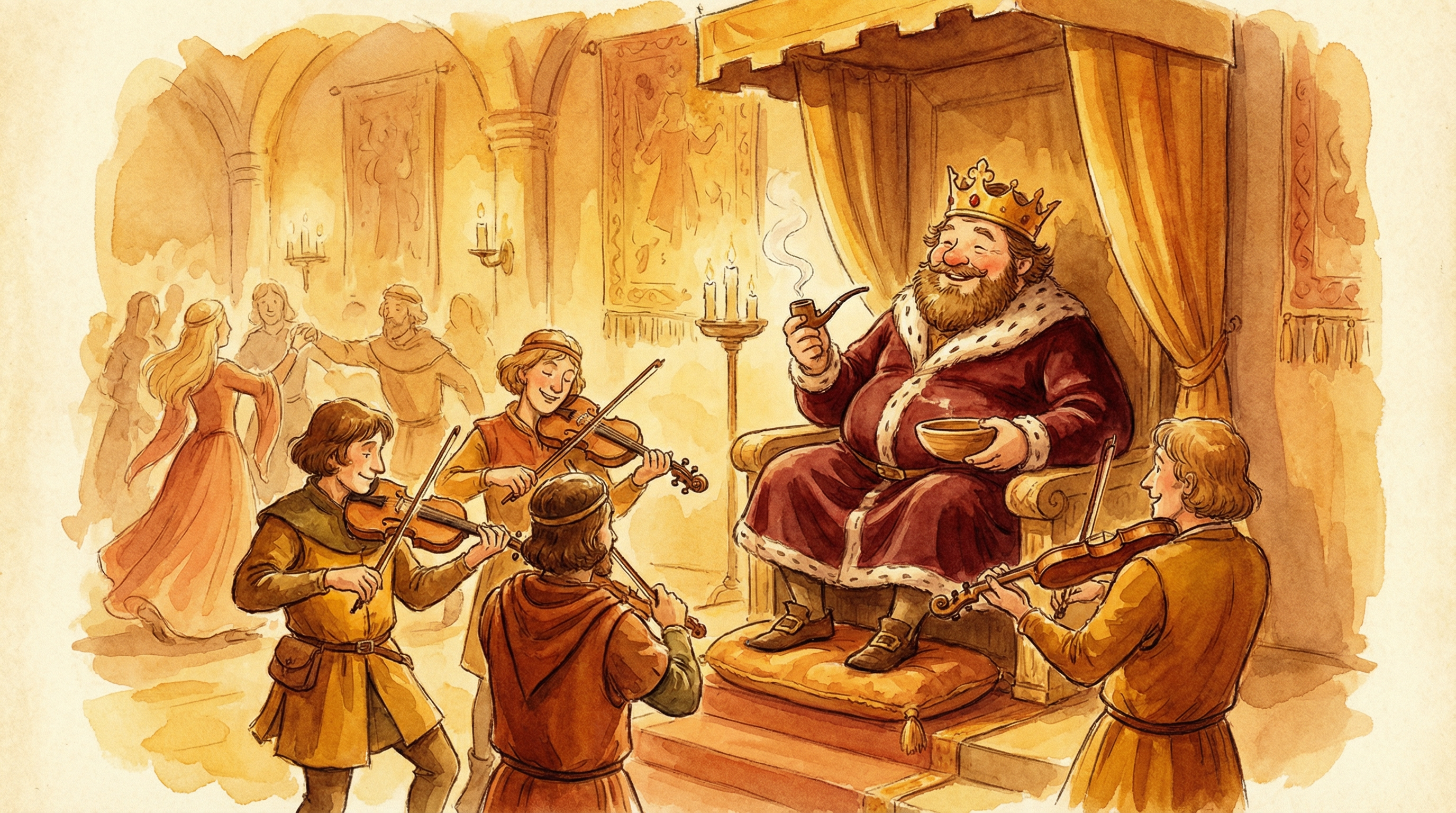
The cat and the fiddle,
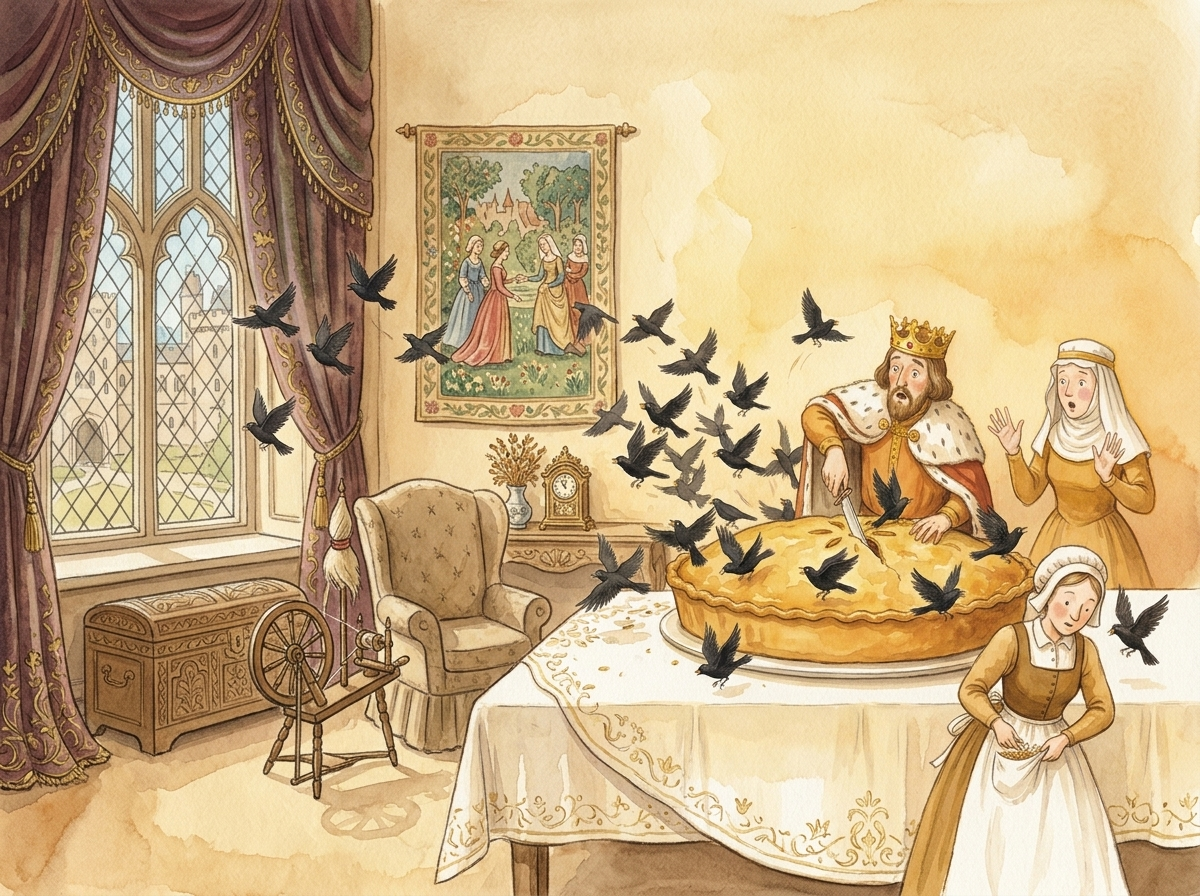
The cow jumped over the moon,
The little dog laughed to see such fun,
And the dish ran away with the spoon, the spoon,
The dish ran away with the spoon.
Traditional lyrics — public domain. Arrangement © Singalongasong Band / ClassicRocks.
History & Background
History & Origin
Hey Diddle Diddle is one of the most instantly recognisable nursery rhymes in the English language, and one of the most cheerfully baffling. Its first known appearance in print dates to 1765, in the collection "Mother Goose's Melody," though it may well be older. In just a few lines it conjures a cat playing a fiddle, a cow leaping over the moon, a laughing dog, and kitchen utensils eloping — an image so vivid and strange that it has delighted children for more than two and a half centuries.
Various scholars have proposed explanations for the surrealist imagery. Some have suggested astronomical origins, with the characters representing constellations. Others have linked the rhyme to the court of Elizabeth I, or even to the upheavals of the Tudor period. The most widely held view, however, is that the original meaning — if there ever was a fixed one — has simply been lost to time, and that the rhyme's enduring appeal lies precisely in its joyful nonsense.
The phrase "hey diddle diddle" itself is thought to be a nonsense expression, a musical interjection with no fixed meaning, much like "hey nonny nonny" in other folk traditions.
What is not in dispute is the rhyme's extraordinary cultural staying power. It has been quoted, illustrated, parodied, and reimagined in countless forms. In our recording, fiddle player Mat Williams brings the cat's tune to vivid life in a warm, folky arrangement that perfectly captures the playful spirit of the original.
Historical background sourced from Wikipedia.