Dingle Dangle Scarecrow
The action song where a floppy scarecrow comes hilariously to life
Listen
Arrangement: Ian J. Watts / Mike Wilbury · Singalongasong Band / ClassicRocks
Lyrics
When all the cows were sleeping
And the sun had gone to bed
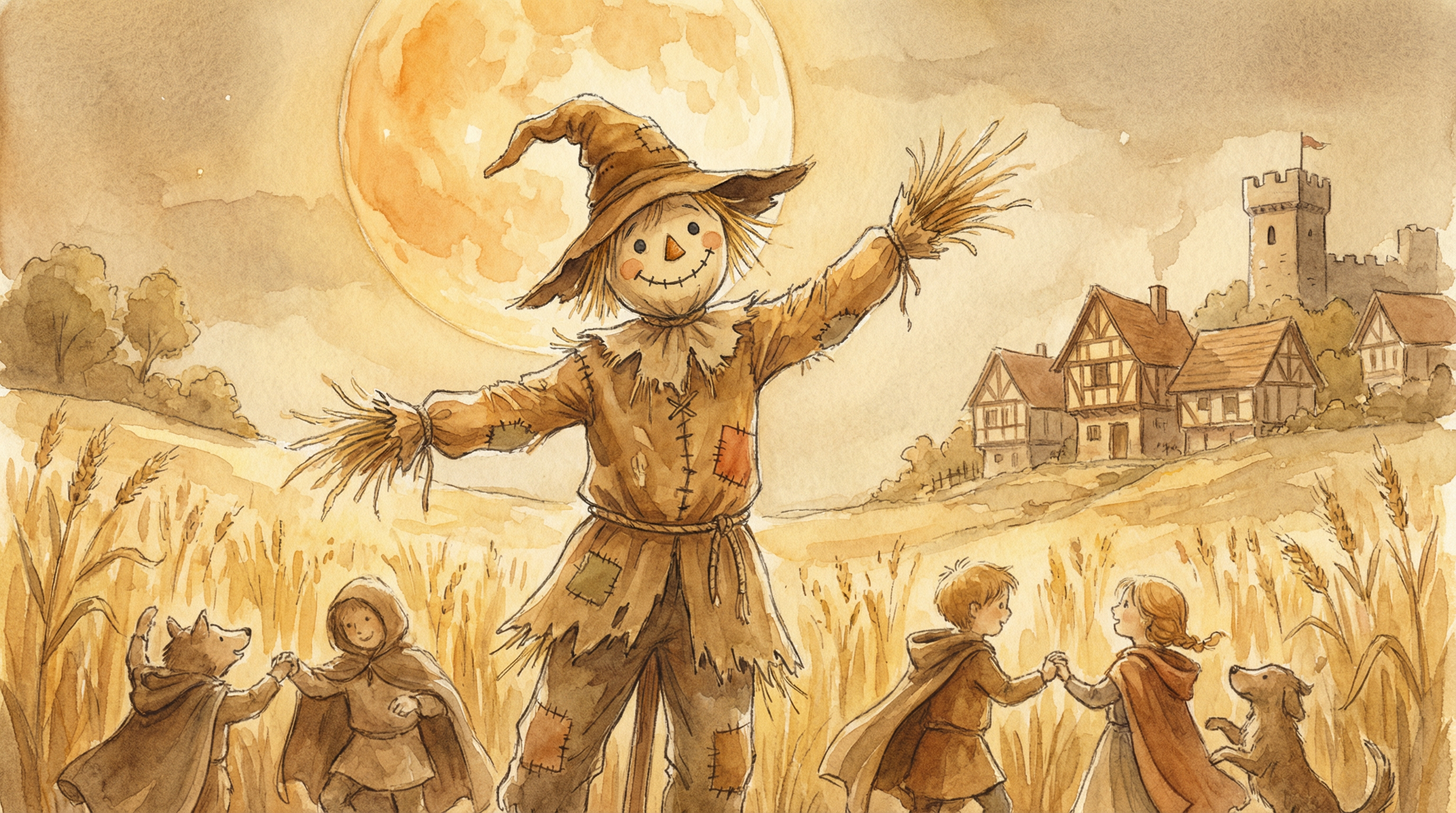
Up jumped the scarecrow
And this is what he said!
I'm a dingle, dangle scarecrow
With a flippy floppy hat
I can shake my hands like this
And shake my feet like that
When all the hens were roosting
And the moon behind the cloud
Up jumped the scarecrow
And shouted very loud
I'm a dingle, dangle scarecrow
With a flippy floppy hat
can shake my hands like this
And shake my feet like that
When the dogs were in the kennels
And the doves were in the loft
Up jumped the scarecrow
And whispered very soft
I'm a dingle, dangle scarecrow
With a flippy floppy hat
I can shake my hands like this
And shake my feet like that
I'm a dingle, dangle scarecrow
With a flippy floppy hat
I can shake my hands like this
And shake my feet like that
Orchestral
Traditional lyrics — public domain. Arrangement © Singalongasong Band / ClassicRocks.
History & Background
History & Origin
"Dingle Dangle Scarecrow" is a traditional action song that has been a favourite in nurseries, playgroups, and infant classrooms for generations. Its appeal is almost entirely physical: the song describes a scarecrow coming to life and moving its hands and feet, and children are invited to imitate these movements as they sing.
The scarecrow as a figure in children's culture carries a particular charm. It is a human shape that is not human — a stuffed, floppy thing set up to frighten birds, but which in children's imagination takes on an eccentric, lovable life of its own. The "dingle, dangle" of the title and the "flippy floppy hat" describe a thing that flaps and sways in the breeze, which translates perfectly into a child's loose, enthusiastic movements.
Action songs have a long history in early childhood education. They serve multiple developmental purposes simultaneously: physical coordination and gross motor skills are exercised as children move their bodies; listening skills are sharpened as children follow the song's instructions; and memory is exercised through repetition. Songs like this one, in which the movements are described in the lyrics themselves, are particularly effective because the words and the actions reinforce each other.
The song is sometimes attributed to a specific author but its exact origins are unclear — it has the feel of a playground piece that evolved organically rather than being composed in one sitting. Various versions circulate with slightly different words, though the core image of the jumping scarecrow remains constant across all of them.
Our recording gives it an energetic, slightly anarchic quality that matches the spirit of a scarecrow suddenly come to life.