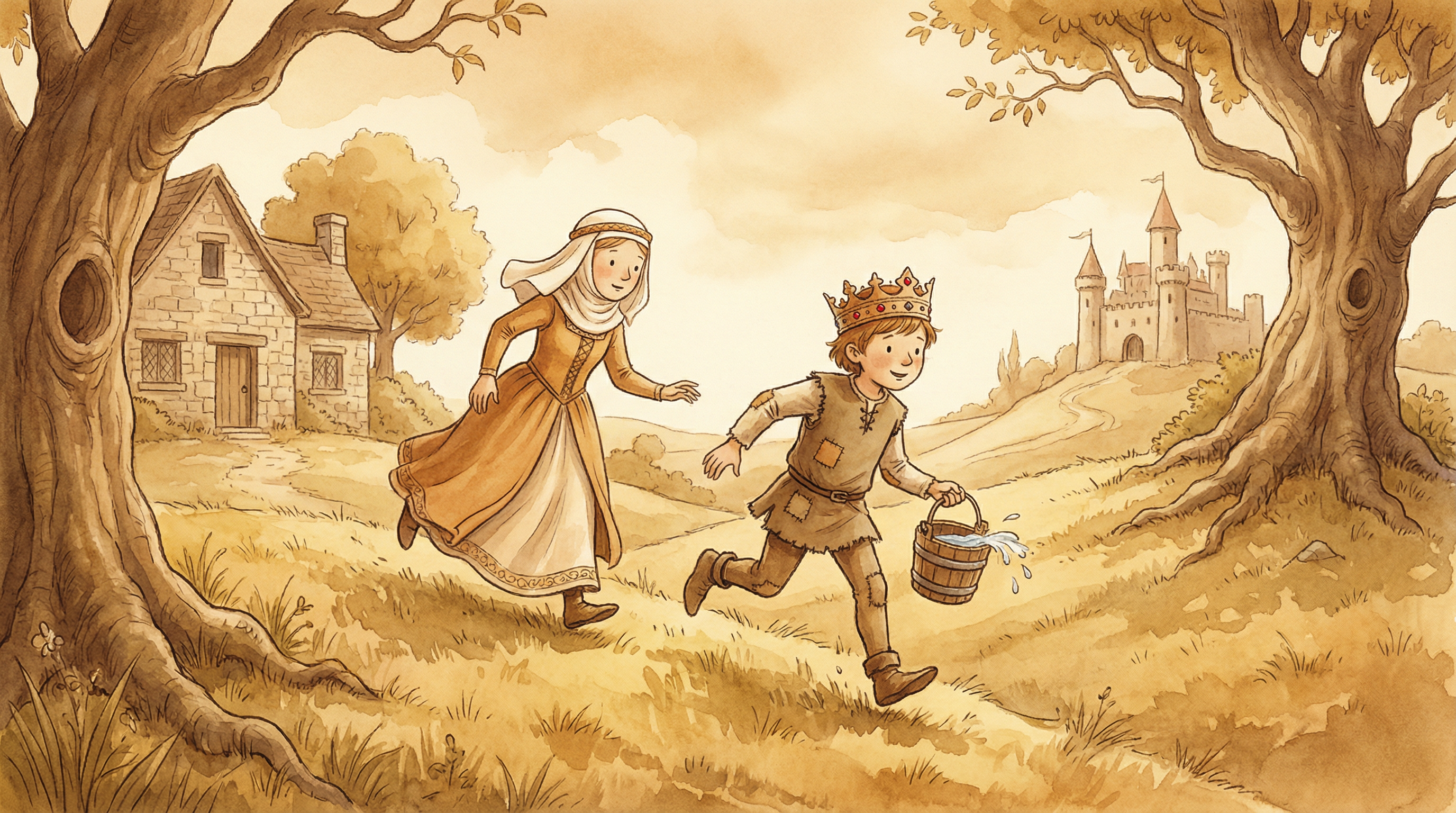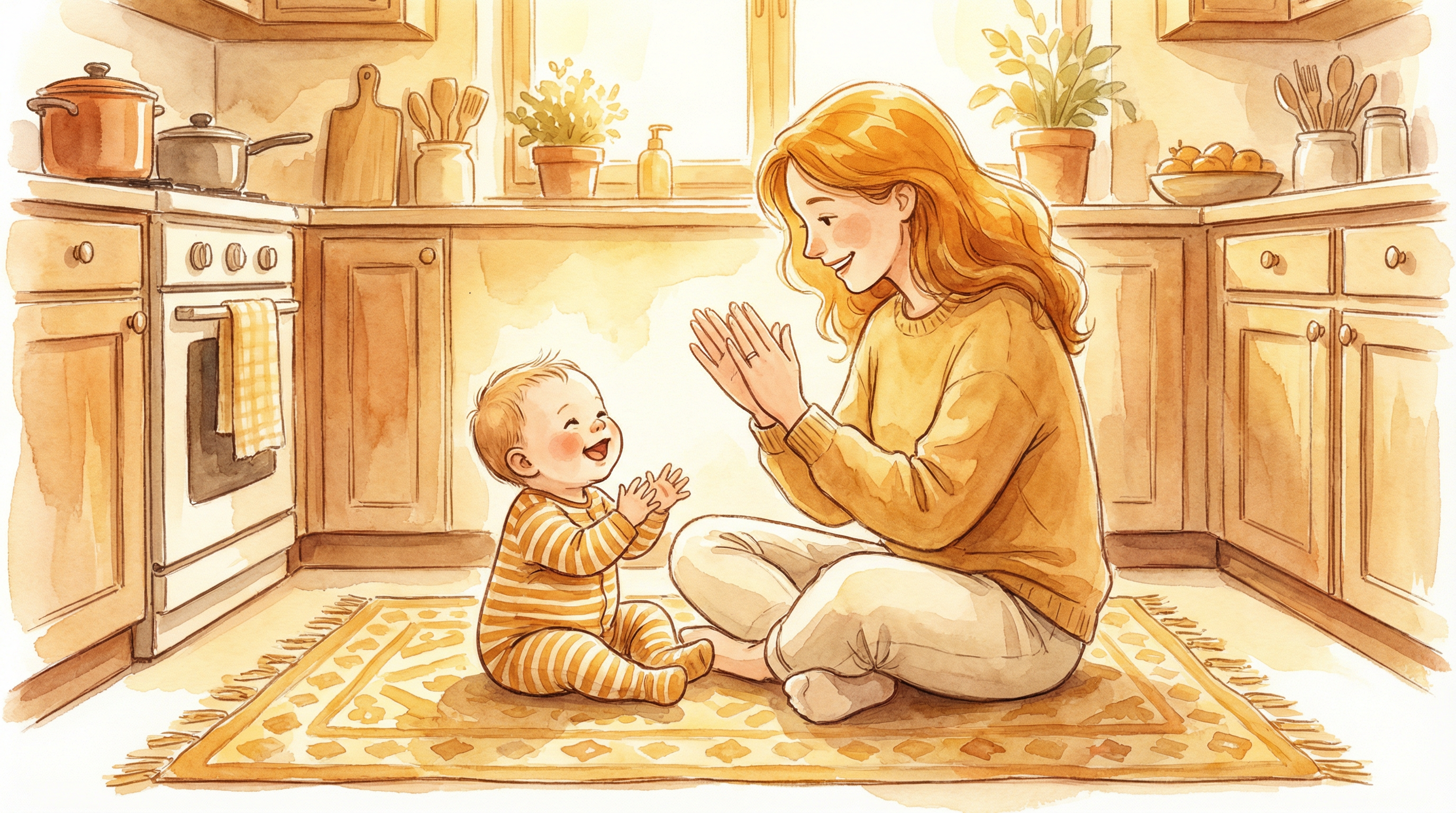
Clap Hands Till Father Comes Home
A traditional clapping rhyme with a surprising economic commentary
Listen
Arrangement: Ian J. Watts / Mike Wilbury · Singalongasong Band / ClassicRocks
Lyrics
Clap hands! Clap hands!
Till father comes home;
For father's got money,
But mother's got none.
Clap hands! Clap hands!
Till father comes home;
For father's got money,
But mother's got none.
Traditional lyrics — public domain. Arrangement © Singalongasong Band / ClassicRocks.
History & Background
History & Origin
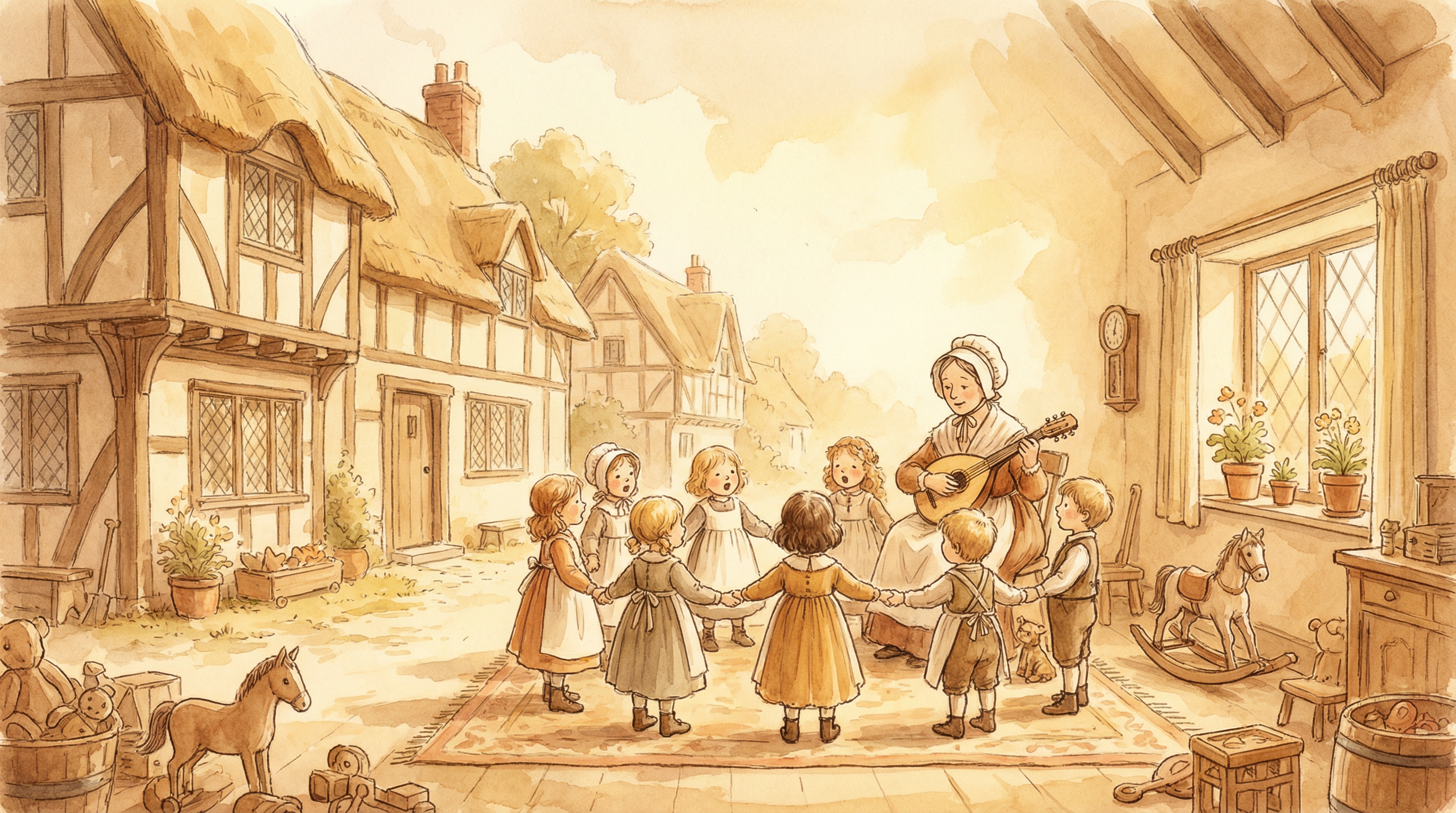
"Clap Hands Till Father Comes Home" is a short traditional nursery rhyme that has survived for centuries by being both a practical clapping game and an unexpectedly frank commentary on domestic economics.
The rhyme's key line — "father's got money, but mother's got none" — reflects the legal and financial realities of life for women in the eighteenth and nineteenth centuries. Under the doctrine of coverture, which governed English law until the Married Women's Property Acts of 1870 and 1882, a married woman had no independent legal right to hold property or money. Her earnings and possessions became her husband's upon marriage. The rhyme, in its blunt two-line summary, captures this reality with the unvarnished directness of folk song.
This does not mean the rhyme was composed as social protest — it is far more likely to have emerged organically from the lived experience of ordinary families, becoming a clapping game because its rhythm and repetition suited young children perfectly. But embedded within its simplicity is a genuine historical document.
The structure of the rhyme — a repeated imperative followed by a reason — is common in traditional clapping and action songs, and its brevity made it easy to memorise and adapt. Regional variants exist, some with additional verses describing what father will bring home or what the family will eat.
Our recording enriches the original with new verses that keep the domestic setting while bringing a warmer, more collaborative tone to the relationship between mother and child.