Listen
Arrangement: Ian J. Watts / Mike Wilbury · Singalongasong Band / ClassicRocks
Lyrics
There was a man lived in the moon,
Lived in the moon, lived in the moon,
There was a man lived in the moon,
And his name was Aiken Drum.
He played upon a ladle,
A ladle, a ladle,
And he played upon a ladle,
And his name was Aiken Drum.
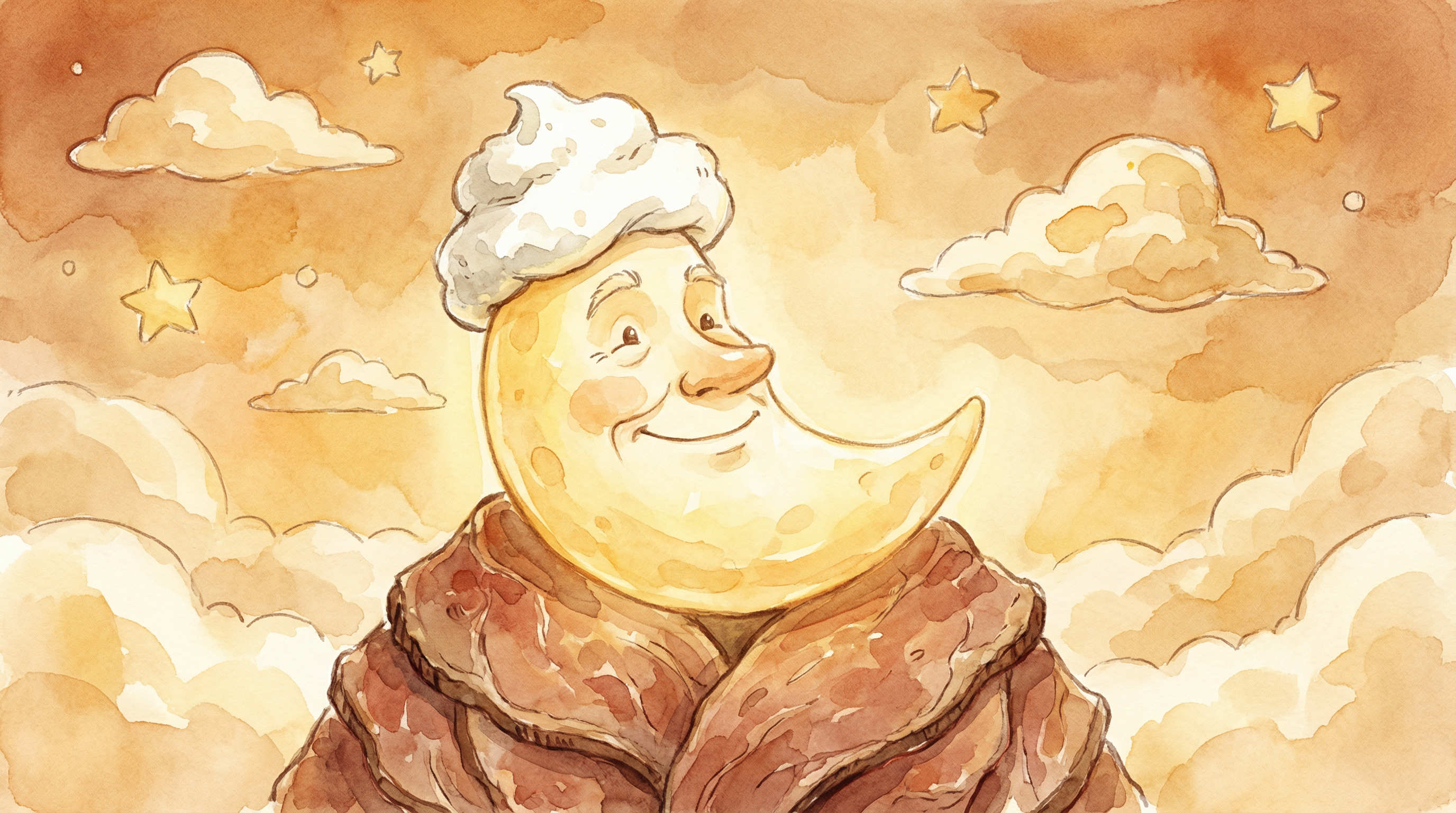
And his hat was made of good cream cheese,
Good cream cheese, good cream cheese,
And his hat was made of good cream cheese,
And his name was Aiken Drum.
And he played upon a ladle,
A ladle, a ladle,
And he played upon a ladle,
And his name was Aiken Drum.
And his coat was made of good roast beef,
Good roast beef, good roast beef,
And his coat was made of good roast beef,
And his name was Aiken Drum.
He played upon a ladle,
A ladle, a ladle,
And he played upon a ladle,
And his name was Aiken Drum.
And his buttons were made of penny loaves,
penny loaves, penny loaves,
And his buttons were made of penny loaves,
And his name was Aiken Drum.
He played upon a ladle,
A ladle, a ladle,
And he played upon a ladle,
And his name was Aiken Drum.
His waistcoat was made of crust of pies,
Crust of pies, crust of pies,
His waistcoat was made of crust of pies,
And his name was Aiken Drum.
He played upon a ladle,
A ladle, a ladle,
And he played upon a ladle,
And his name was Aiken Drum.
Traditional lyrics — public domain. Arrangement © Singalongasong Band / ClassicRocks.
History & Background
History & Origin
Aiken Drum is a wonderfully peculiar Scottish folk song whose main character — a man living in the moon, whose body is constructed entirely from food — has captivated children's imaginations for two centuries.
The song was first published in 1821 in Robert Chambers' collection of Scottish songs, though its oral origins are likely considerably older. The name "Aiken Drum" (sometimes "Aikin Drum") is thought to derive from a real historical figure — possibly William Airds Drum, a piper said to have played at the Battle of Sheriffmuir in 1715. Some versions of the song have political overtones relating to the Jacobite rising, though the food-themed children's version has long overshadowed any political original.
The genius of the song as a children's piece lies in its cumulative, open-ended structure. Each verse adds a new body part made from a new food — hat of cream cheese, coat of roast beef, buttons of penny loaves — and children can invent new verses indefinitely. It is a song that rewards silliness and imagination in equal measure.